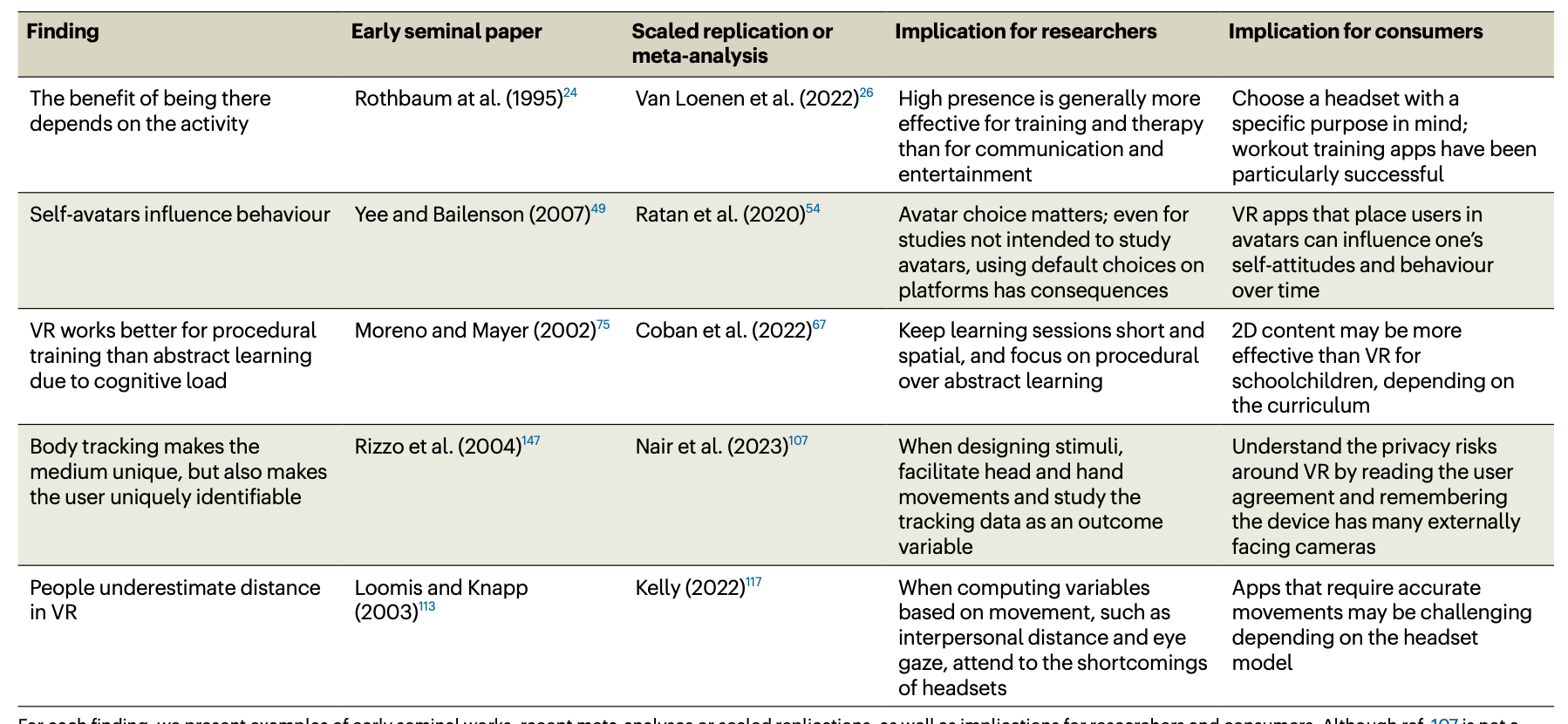
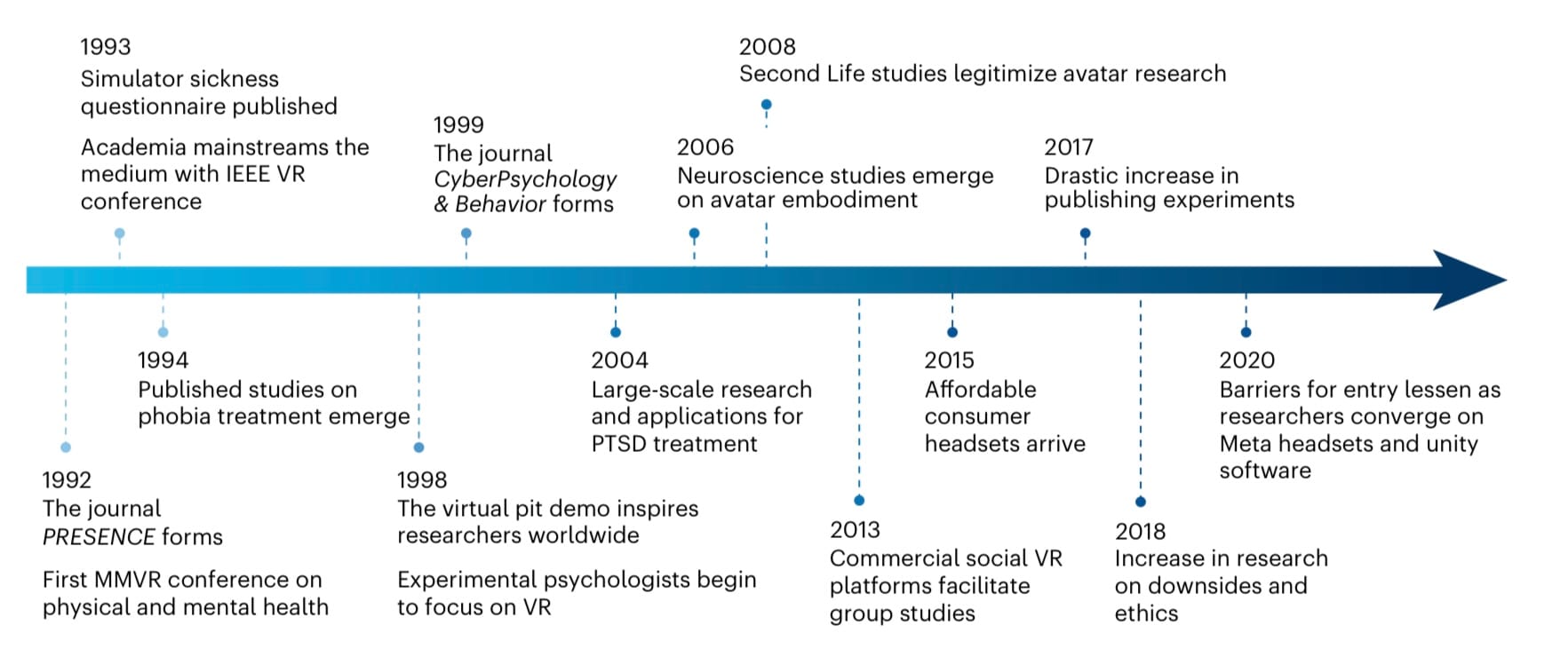
Stanford VR researchers have published a research paper in the leading social sciences journal that sifts through decades worth of studies and presents five truths about this medium. The chart below, from the Nature Human Behavior paper, outlines key findings of decades of psychological research on VR. It is intended to inform both researchers and consumers. Regular readers are likely to be familiar with these concepts, but what about those who have been sent this page by a VR enthusiast friend? It’s amazing to think that the Meta Quest 3S, which costs $300, and the Vision Pro, which costs $3500, are the same thing. They are both VR headsets and are part of the same trend. The paper below provides a timeline of the VR research journey. Here are the five main findings from the paper that have implications for consumers:
Choose a headset that is suited to your needs; fitness training apps can be very effective. What Is the Purpose of VR? The paper also uses “DICE”, to help remember the four categories of VR experiences. “We primarily use virtual reality for dangerous, impossible or counterproductive, expensive experiences that cannot be implemented in the real world”, echoing Jeremy Bailenson’s 2018 book :”Experience On Request”. The paper says that DICE includes training firefighters, rehabilitation of stroke victims, art history through sculpture museums, and having a visceral experience to better understand climate change. “Alternatively you don’t have to wear a head-mounted display to watch television, read email or do general office tasks. The 2D screen is better for such applications. The society can avoid many of the challenges VR poses by not putting unnecessary use cases in VR.
Quest 3 allows me to play mini-golf and talk with my coworker about the future before hundreds of people every week. I use my Vision Pro to begin my day by going to the moon. I can also zoom in on the street level and the globe of the earth. It’s either impossible to do in the real world or it is too expensive. Then, I could access my emails and TV in VR and continue to work. If you want to know more about VR, why people use it, and its potential uses in the near future, then I recommend reading my
article and moving on to
. On Thursdays, we will be covering the latest in the
- .