[ad_1]
We recently attended Japan’s Expo 2025, weighing up how this World’s Fair compares with its virtual counterpart.
Expo 2025 is a World’s Fair of old, dragged into the present. World’s Fairs are an old tradition that has been around since the 19th century. They were held by both governments and private companies to show off their national pride. The concept is a mix of soft power politics, science fairs, and technology. You’ll find Astro Boy exploring iPCS cells and the future of healthcares, star-shaped stars singing about America the Land of the Free, and AI, and Monster Hunter XR showcases in the same place. It’s hard to overstate the historic impact of these events. The Eiffel tower was built for France’s World Expo in 1889, and other fairs witnessed the debuts of the Ferris Wheel as well as the mobile phone. These events provide a snapshot of what the world was like at that time and also what the future could hold. Expo 2025 won the rights to host its event in 2018, and thus was fully realized and begun construction in the depths of the COVID-19 pandemic and the metaverse craze.
If you’re crafting a major showcase under these parameters in the lockdown depths of 2020, why
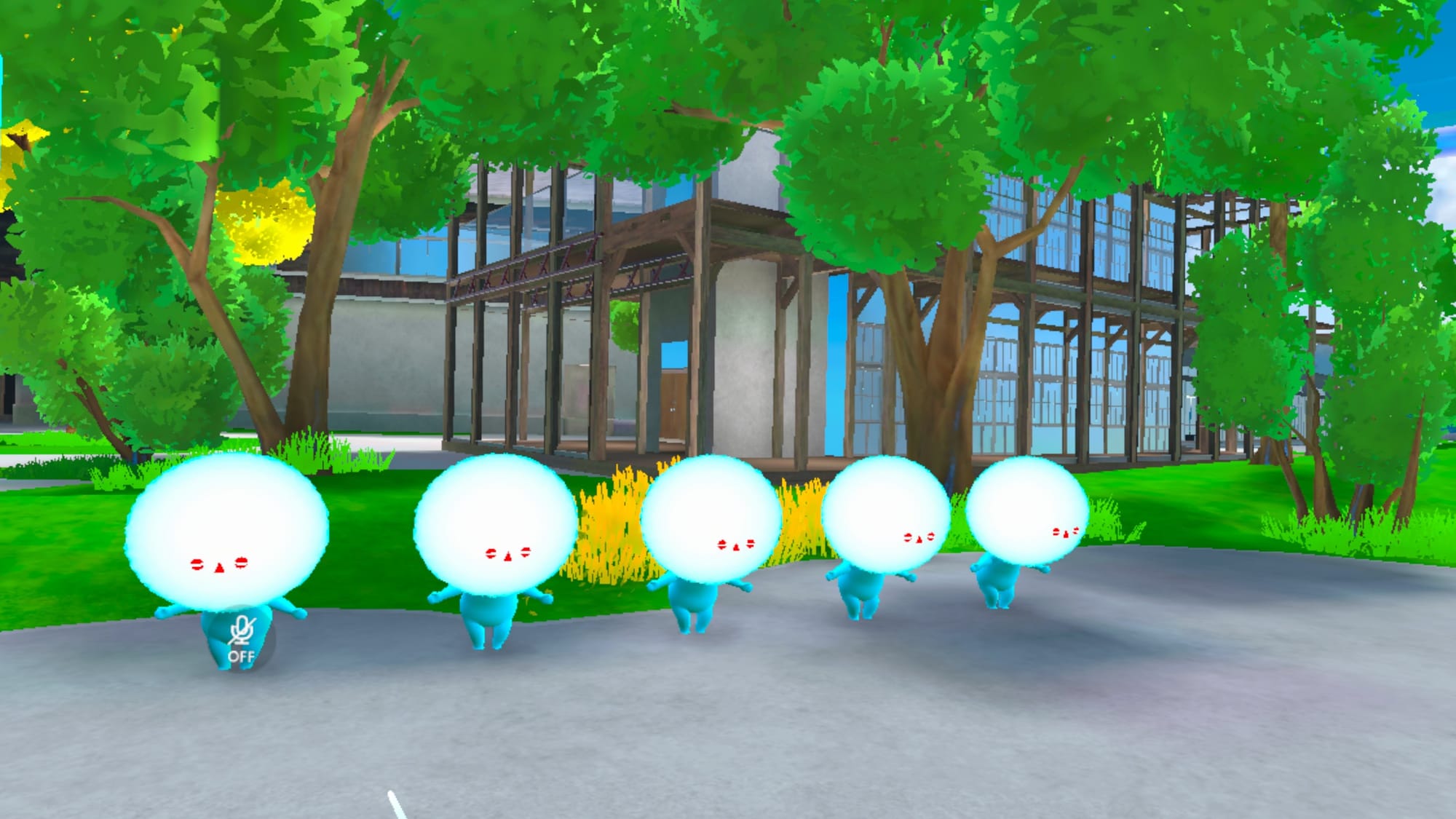
wouldn’t you propose a Virtual Expo for your event? Expo 2025 will be held in Osaka, Japan. Everyone is welcome to attend. Virtual events are not a thing of the past, nor is the idea of them out of step with other Japanese organizations. Even though the Japanese government imposed a lockdown, online communication and events did not disappear. We still use Zoom and Tokyo Game Show 11001010 while its physical event is back to capacity. The difference now is that people want to connect and have fun in person, not just behind a computer screen. Virtual Expo: Yumeshima Island in the Sky, named after the artificial island Yumeshima in Osaka, must offer a unique, immersive experience that is not available anywhere else, including at the actual event. Virtual Expo, a free app that is more comprehensive than the average VRChat, offers enough content for it to feel as a game. After logging into your Expo account you enter a full avatar creator that, though admittedly limited to a few set facial styles, costumes, hairstyles, plus hair and skin colors, still gives players ample ability for self-expression.You’re then dropped into the application’s hub world where you can meet the charming and adorable Soramin, before being released to explore the expo. This is a dynamic hub that moves at the pace of the actual expo. As a World Expo, there is an expectation that players from all cultures and languages will join. There’s even a built-in translator for voice and text chat in multiple languages so you can talk to strangers or friends inside the event. It’s a World Expo, so there is an integrated translator to allow you to communicate in multiple languages. Until you dig closer.
There’s a sense of contractual obligation with the event, a clear example of many countries being forced to participate while soon realizing the Virtual side of the expo was far from a priority. Players are invited to explore each virtual island and its pavilions. Some will even give you emotes for communicating with other players or new costumes. Some will even give you emotes for communicating with other players or new costumes.continues to support its virtual renditionThese islands recreate the floor plan of the expo on a 1:1 scale that’s surprisingly helpful if you jump from the virtual to the physical Expo (the real event is not the most intuitive to navigate, to the point I still found new pavilions even in the latter stages of a 10-hour day). The virtual expo was useful for creating a map of the exposition, which helped me when I went to Osaka that same week. Some are completely nonexistent and force players to wait for long loads only to be greeted by an empty room featuring a blurry image of a artist’s rendering of the Pavilion with text descriptions of what Expo 2025 has in store. These copy and paste template pavilions, with their flashy facades that mimic the real thing in order to make these buildings appear enticing are all too common. From a sample of roughly 40 virtual pavilions, over 50% followed this exact formula, similar to going to a party only to watch the door get locked in front of you just as you’re about to approach.
Some countries did attempt to create something. Mozambique offered a walking tour where speakers discussed their culture, along with stunning photographs of people. You could even get a costume for free to wear as you left the pavilion. There are six Signature Pavilions, built by artists and professors from Japan to challenge the theme of Expo 2025. They also embrace their craft. Six Signature Pavilions will be available in Expo 2025. They were built by artists and professors across Japan who wanted to embrace the theme of the event and challenge it. Instead of abandoning the concept, the disorienting VR experience was created to make visitors spiral inward and reflect on their own status and identity. It’s a little terrifying for its chaotic structure, but somehow it works.
Pavilions like this, or the Panasonic pavilion that turns the drawings of kids to life to capture the spark of human creativity, show a path these pavilions could have taken to make these virtual experiences meaningful and distinct. Virtual Expo, on the other hand, is a space full of empty dreams and broken promises, with no attendees to speak with so that you can experience it together. You can watch them here, though they are YouTube livestreams that you could easily view without the application. You can watch them here, though even these are YouTube livestreams you could more easily watch without the application.

It’s a nice idea that people unable to visit Osaka can experience the event virtually, with the motivation to meet people and customize an avatar while doing so. It’s a nice idea, but it’s hard to create the experience of a World’s Fair if all you see is YouTube videos or empty rooms. After visiting the Expo, I would argue that the Virtual Expo shows the flaws in the maximist view of metaverse. It doesn’t matter if the app is the most accurate virtual representation of Expo 2025, because it still misses a key point. At least in the short term, you can’t recreate the spontaneity and connection of humans. It’s okay.
It had been a warm, yet cloudy Thursday morning when I went to Expo 2025. I thoroughly researched the trip in advance out of curiosity and the desire to make the most of my time. It may seem silly, but the thought of going to a World’s Fair excited me. I was eager to learn new things and I wanted to visit some pavilions that I had read about in guides and been told I must see. Some pavilions I reserved in advance, and others I planned to book on the spot or queue up. France was full of classic art and Chopin in Poland, but the taiko matsuuri I saw that day only took place at my chosen pavilion. The excitement was overwhelming! The most happiness came from the unexpected. While I was waiting for my reservation, knowing I had no time before my scheduled time to do any meaningful checking, I came across the Malaysia Pavilion. Dancers were performing traditional Malay dancing on a raised platform near the pavilion entrance. It was mesmerizing.
I’m not one to profess expert knowledge on this topic, but the smooth movements and playful interactions between the male and female dancers were a joy to watch, skipping from heel to toe with precision and grace. They ran towards the audience at the end of the routine and pulled me, as well as many others of different nationalities, onto the stage. We learned basic moves and tried to imitate them for five minutes. At the end of the dance, people from different cultures and languages were congratulating and hugging each other for this opportunity to unite as strangers. It’s possible to have fun or make new friends virtually. However, there is a certain amount of control on what can be said or done. The Virtual Expo rewards you for completing all the pavilions. Expo 2025 was the first time I experienced a country I’d never been to before. I also had authentic African food and met a stranger while waiting in line. We shared our stories. Virtual Expo was a great experience. I got to ride a train that pushed AI in outer space and received requests for NFTs. It’s true that technology can improve our lives. But, whether AI chatbots replace friendships, or virtual hangouts take the place of physical meetings, being human is about spontaneity. This cannot be coded. What about the feeling of my fingers when I am being forced to join a group dance class? Maybe, but maybe not now. The Virtual Expo cannot match the excitement of the actual thing because it’s the chaos and joy that is unpredictable. Expo 2025 is a great way to learn about other cultures and countries with strangers. If you’re in Osaka, before October arrives, we recommend that you visit. You can skip Yumeshima’s Island in the Sky.
[ad_2]
Source link