[ad_1]
Read on for our full review. Read on for our full review.
To be entirely frank, I think that growing up, or rather
being a grown up…sucks.Once upon a time, my life was full of piloting action figures through imaginary landscapes and doing battle with the worst bad guys that my imagination could create (or that my birthday money could provide). Age and responsibility took over me, as they do for most people. Eventually I downed my toys in favor of pseudo-maturity, though I never stopped yearning for that same sense of wonder.
The Facts
: An on-rails third-person narrative shooter.Platforms
: (reviewed on Quest 3)Meta QuestRelease Date
: Out NowDeveloper
: HEROmationPrice:
$24.99Why am I telling you this? When I first saw The Phoenix Gene’s
, those same feelings flooded back. It was as if my childhood imagination had been merged with the world of the game. I thought that my adulthood would bring me back into the realm of toys at the age first trailer. The only thing left to ask is: did HEROmation or me, at eight years old, do it better? Play… [insert unnervingly high number]Troping the Light Fantastic
In The Phoenix Gene, the player takes on the role Jackie, who is a young employee at one of the biggest corporations in the world. Firestorm, an erupting dragon-like character, appears in the middle of a dreadful lack of narrative and tells you you have the Phoenix Gene. The story is built around a number of familiar sci-fi clichés: you’re the chosen one; an AI went rogue; a parent who died had a hidden secret. All of this comes with the warning to beware of corporate greed. Though none of it digs particularly deep, the story is woven into the game enough that it provides context to the action and prevents the experience from feeling like an aimless floating shooting gallery.

Slipstreamy When Wet
As Jackie begins to unlock the potential of the Phoenix Gene, she gains access to a metaphysical realm called the
slipstream
, a multidimensional vortex of alternate timelines. This slipstream serves as much of the game’s physical setting as well as a vehicle for some core gameplay mechanics.
With a total of eight levels on offer, each taking around 15 to 20 minutes to complete, The Phoenix Gene could be finished in a few hours under ideal conditions. Due to the clumsy controls and the occasionally infuriating difficulty spike, players are likely to spend significantly longer navigating the slipstream, and not necessarily in a way that will feel rewarding.Throwing My Toys Out The PramSimilar to games like the admirable
, the gameplay in The Phoenix Gene sees players controlling their character very much as one might play with a toy. Your Phoenix, Firestorm, hovers in front of you and can be grabbed and passed from one invisible hand to the other, allowing you to guide the character through the game world with your physical movements.
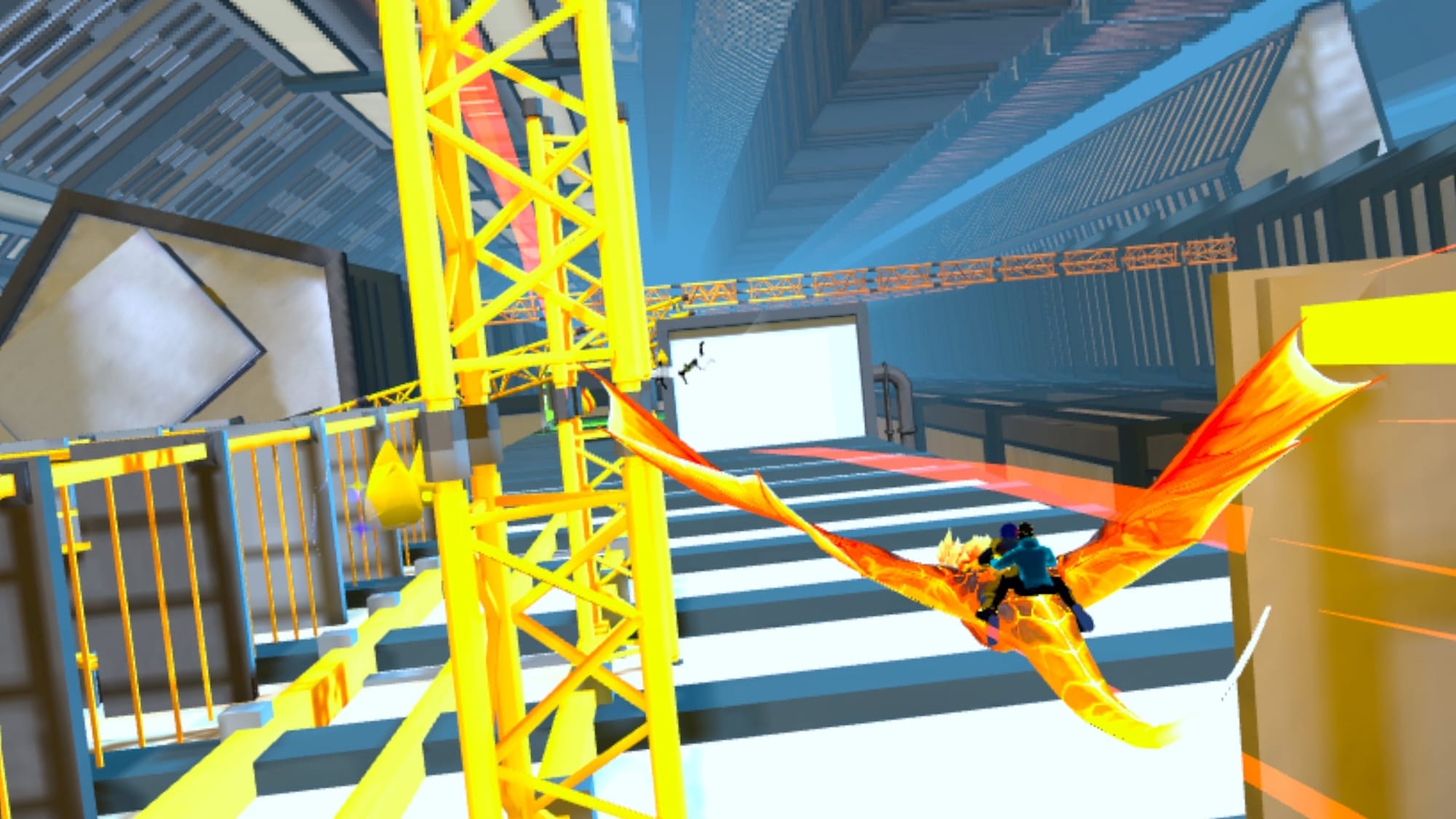
Firestorm also doubles as your weapon, flinging fireballs and other attacks at your enemies as you aim by tilting and rotating your hands. This initially feels cool, and there is some early promise of a fun gameplay. Jackie and Firestorm have the ability to switch between different realities, similar to Ikaruga. Players can switch between the
probabilitiesYuki, alternate realities within the timeline that essentially just switch Firestorm between red and blue, making Firestorm impervious to enemy attacks of that color. Switching probabilities will also alter the physical environment, moving objects in and out of the current reality.
While
theoretically interesting, this element of the game is sorely underdeveloped from a level design perspective and often serves more as a distraction than a compelling mechanic.Frustration By Design
Levels in The Phoenix Gene are an entirely on-rails affair, with the gameplay weaving through the pseudo-psychedelic landscape of the slipstream. Most games in this genre would have you move forward straight ahead so players could see impending obstacles. The Phoenix Gene, however, takes a completely different approach and weaves the invisible rails into the physical world. Again, this reads like it should be great; however, the reality is far from fantastic.
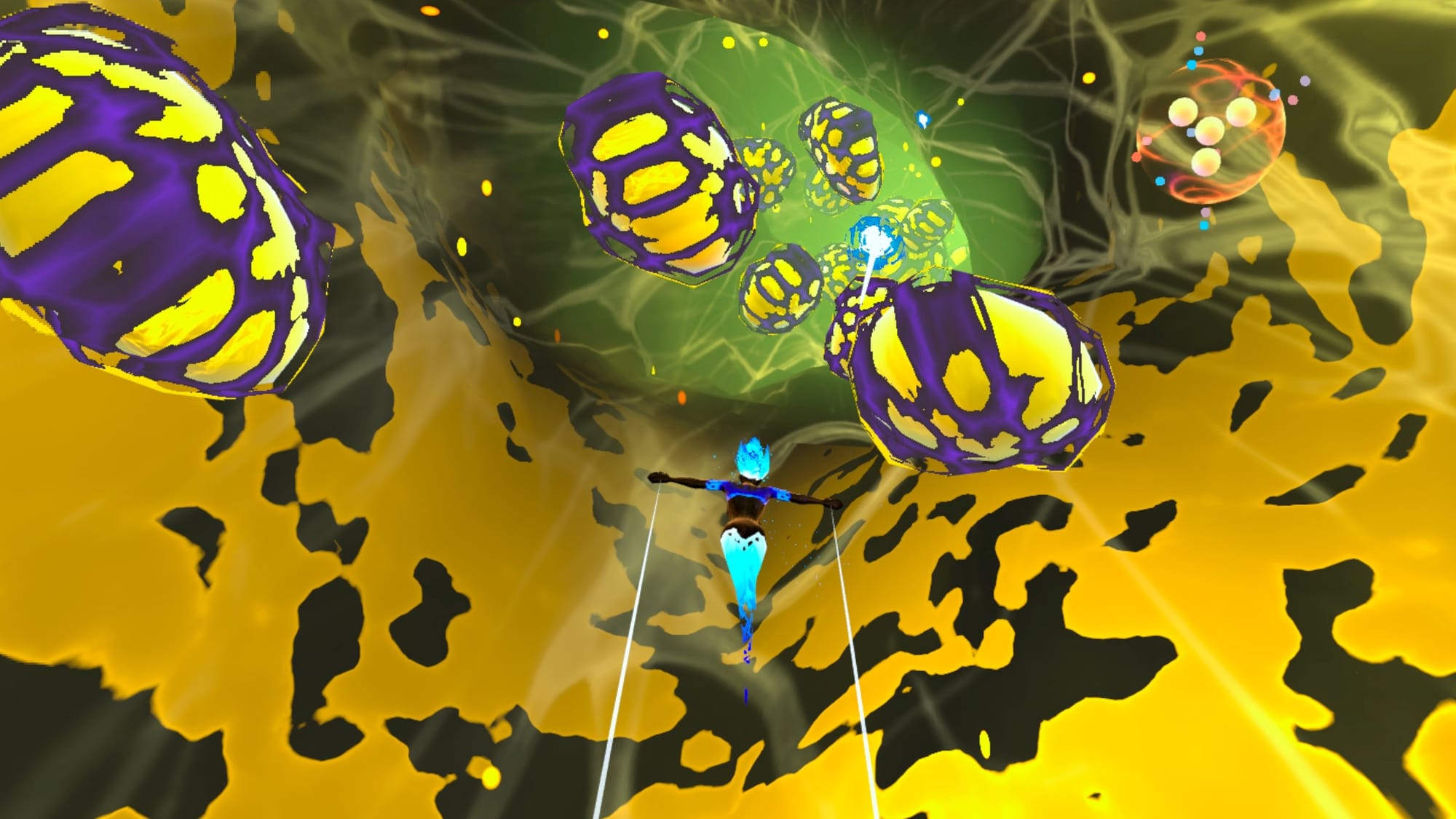
As the game draws the player along these invisible rails, there is no indication which path your phoenix will take. This means that in the heart of the action, where you need to dodge enemy fire coming from all around you while avoiding physical obstacles, your character might veer off unexpectedly, running straight into a certain death situation.
This lack of directional guidance is exacerbated by the fact that when switching hands, your phoenix often resets to a central position that can appear behind you if you have been moving in your IRL space, something which is guaranteed to happen. The phoenix disappears. All this means that in the heat of battle, knowing where your character is and where it’s going is completely unreliable.Also, in an entirely unintuitive piece of design logic, Firestorm cannot turn around AT ALL, despite the fact he can shoot in full 360 orientation. It is likely to keep the player oriented in the direction they are moving. It is distracting to have fireballs shooting out from its wings or back when you are trying to dodge obstacles. The Phoenix Gene, an on-rails game that automates movement in the world of the game, does not have comfort settings for teleporting. There are however options for vignettes, as well as smooth and snap turning, which is just as well seeing as the forced movement can be relatively disorienting at times.Stepping Back In Time
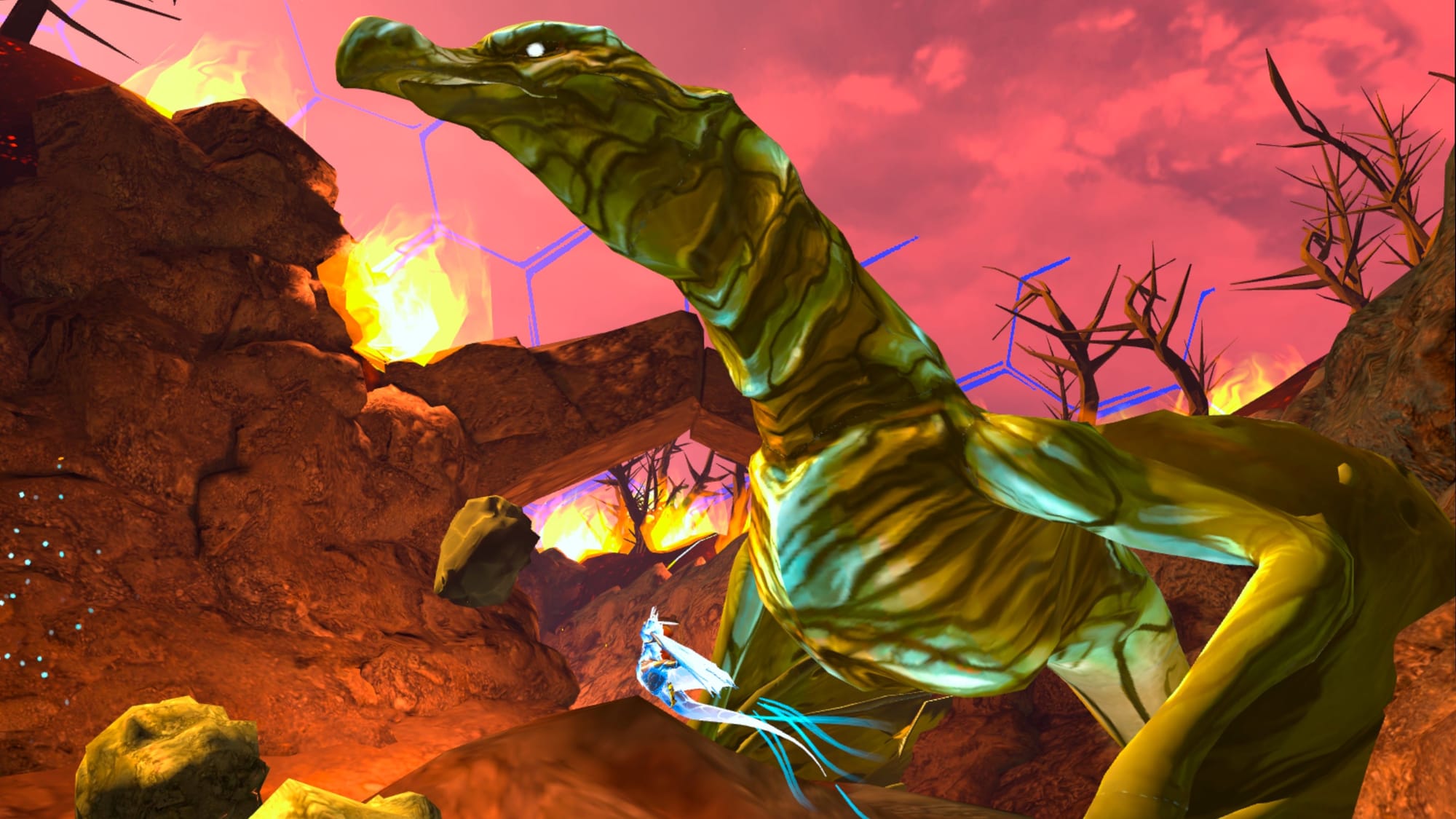
Visually, The Phoenix Gene feels like something that would be at home on the original Quest. Although bright and colorful, the overall effect is a little low-res. The environments (especially the slipstream), animations and character models are basic. The art direction is reminiscent of the old days of VR games. One of the most visually appealing and fun segments was the level where you fly down the side of an apartment building to rescue a group base jumpers. Firestorm’s character design is pretty great, and moving your phoenix around like you’re playing with a super cool dragon toy was initially an enjoyable experience.
Unfortunately, the audio doesn’t fare much better. The voice acting in this game is stilted and flat, but the writers haven’t provided much for the actors to do. The music is a nondescript melange of video-gamey sounds that, while functional, do little to elevate the atmosphere or distinguish moments of tension or triumph.
The Phoenix Gene – Final Verdict
Sadly, The Phoenix Gene reads better as a concept than it plays as a game. While the idea of controlling a dragon-like creature through a chaotic multidimensional rail shooter sounds fun, the reality is that the game’s let down by confusing controls, outdated visuals and poor design choices that leave it feeling clumsy and sluggish.
Unlike Yuki, which delivers similar mechanics in a fast, responsive manner that celebrates the nostalgia of play, The Phoenix Gene somehow makes a chore out of using a toy-like avatar to blast robots into smithereens.
UploadVR uses a 5-Star rating system for our game reviews – you can read a breakdown of each star rating in our
.
[ad_2]
Source link