Xreal has just announced Project Aura. New glasses will support Android XR through a tethered computing puck. Google’s Android XR operating system is designed to compete with Meta’s Horizon OS, and also power smart glasses. Project Aura, announced during Google I/O, is the second Android XR device revealed after
. It’s also the first to utilize a transparent display, or optical see-through augmented reality. Xreal has not revealed any specifics about Project Aura. It only shared the image above of the design, while confirming it would support Android XR through a tethered computing puck powered by a Qualcomm Qualcomm chip. The Project Aura design resembles that of the 3DoF-Samsung’s headset except for the addition of a camera to each temple. It is pointed downwards. A second camera is placed in the lens center. These side cameras may be used to track 6DoF and the hand, while Google’s Gemini AI will use the central camera for video and photos.
While Xreal glasses are designed to look similar to sunglasses, they are much farther away from your eyes. They are a different device category compared with the AR glasses being developed at
Xreal Beam Pro: A Phone-Like Device To Power Xreal Glasses
Xreal Beam Pro is essentially a custom Android phone specifically designed to power Xreal Glasses, including 6DoF AR on Xreal Air 2 Ultra.
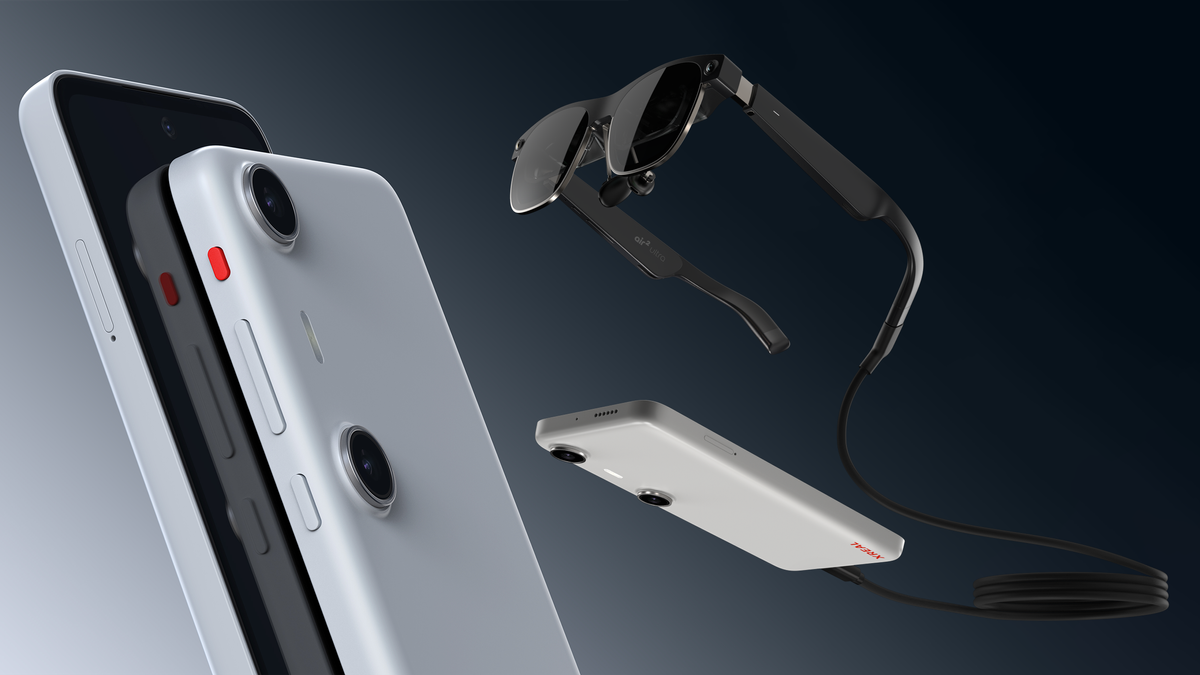
or Xreal One display glasses. The future AR glasses are using a display technique called waveguides, which allows them to be as close as normal glasses to your eyes. Xreal is using a cheaper but much bulkier method called birdbath optometry. These glasses also block most of the light and can’t even be used indoors. The Xreal device looks like glasses, but is much farther away from your eyes.
Xreal will unveil more details about Project Aura during the Augmented World Expo in June. UploadVR’s Don Hopper is going to be there for a test. UPDATE: This article has been updated with the information that Xreal told Meta about the new compute puck that would be used to tether this device. Apple